Within Mythcraft
When Expert Trust Carries Bad Claims
Health beliefs can become durable when a trusted professional, institution or expert-sounding source appears to support them.

On this page
- Authority in health decisions
- Expertise, consensus and outliers
- Respectful correction in clinics
Page outline Jump by section
Introduction
Doctor and expert trust can protect people from health myths, but it can also make bad claims harder to dislodge when a professional, institution or expert-sounding source appears to endorse them. Health decisions often involve uncertainty, stress and technical detail, so people reasonably use trusted authorities as shortcuts. The risk begins when that shortcut is hijacked: a lone doctor is treated as equivalent to a medical consensus, a prestigious journal gives a weak claim temporary legitimacy, or a social media account borrows the symbols of expertise without the safeguards of clinical practice.
The problem is not that people should distrust doctors. The opposite is usually true: strong clinician-patient trust is one of the best defences against misinformation. The more useful lesson is that expertise has to be placed in context. A claim is more reliable when it reflects converging evidence, relevant specialist knowledge, transparent uncertainty and professional accountability. It is weaker when it depends on one credentialed voice, cherry-picked studies, dramatic certainty or an appeal to “what doctors will not tell you”.
Why authority matters in health decisions
Health is one of the areas where ordinary scepticism often has to coexist with dependence. A patient deciding whether to take a medicine, vaccinate a child, follow a cancer screening recommendation or ignore a viral “natural cure” cannot personally reproduce the evidence base. They need a way to decide whom to trust. Doctors, nurses, pharmacists, public health bodies and medical researchers are therefore not just information sources; they are interpreters of risk.
That is why trusted messengers are central to public health communication. The World Health Organization has described health and care workers as trusted influencers during crises, noting that people are more likely to adopt protective measures when health workers serve as messengers or role models.[World Health Organization]who.intWorld Health OrganizationTrusted messengers, community anchors and agents of…9 Dec 2024 — As trusted influencers, they significantly i… CDC vaccination guidance has similarly treated local doctors and other credible community figures as “trusted messengers” who can address mistrust, low health literacy and misinformation.[CDC Archive]archive.cdc.govArchive12 COVID-19 Vaccination Strategies for Your CommunityArchive12 COVID-19 Vaccination Strategies for Your Community
This trust is not blind obedience. In clinical life, trust works best as a relationship: the professional listens, explains trade-offs, acknowledges uncertainty and helps the patient apply evidence to their own circumstances. In myth formation, however, the same trust can be flattened into a badge. A claim becomes persuasive because it is attached to “a doctor says”, “a Harvard scientist says”, “a former public health official says” or “a study in a leading journal says”, even when the actual evidence is narrow, disputed, outdated or misrepresented.
That makes expert trust a double-edged force. It is one of the strongest tools for correcting false health claims, but it also gives unusually long life to myths that manage to acquire an expert sponsor.
When a credential turns a weak claim into a durable myth
The most familiar pattern is the “credential laundering” of a claim. A person with a real qualification, an institutional affiliation or a professional title makes a statement outside the strength of the evidence. The claim then travels through news reports, social media posts, podcasts, private messages and clinic conversations with the credential still attached, while the caveats fall away.
The MMR-autism myth shows how damaging this can be. In 1998, The Lancet published a paper by Andrew Wakefield and colleagues that suggested a possible link involving the measles, mumps and rubella vaccine, bowel disease and developmental disorders. The paper was based on a very small case series and did not establish causation, but its publication in a prestigious medical journal and Wakefield’s status as a doctor helped give the claim public authority. The paper was fully retracted in 2010, and the British General Medical Council found Wakefield had acted dishonestly and irresponsibly; later BMJ reporting described the work as fraudulent.[PMC]pmc.ncbi.nlm.nih.govSource details in endnotes.[PMC]pmc.ncbi.nlm.nih.govSource details in endnotes. The case matters because it was not merely a false rumour circulating outside medicine. It was a health myth that gained force through medical symbols: a doctor, a hospital setting, a journal article, press attention and the language of scientific concern. Once the claim entered public imagination, later correction had to compete not only with fear of vaccines but with the memory that “a doctor raised questions”.
COVID-19 produced newer versions of the same pattern. Some clinicians promoted unsupported or non-evidence-based treatments, while some online communities treated those clinicians as proof that “real doctors disagree” with mainstream guidance. A survey study on ivermectin and hydroxychloroquine found that use of these non-evidence-based COVID-19 treatments was associated with endorsement of misinformation and patterns of institutional trust and distrust.[PMC]pmc.ncbi.nlm.nih.govSource details in endnotes. The authority signal did not have to represent the medical mainstream; it only had to provide enough professional cover for people already inclined to doubt official advice.
Expertise is not the same as consensus
One of the easiest ways health myths misuse expert trust is by blurring the difference between an expert and the expert consensus. A cardiologist, immunologist, nutrition scientist or GP may be highly trained, but one expert’s view is not the same as the best current judgement of a field. Medicine is full of uncertainty and disagreement, yet not all disagreement carries equal weight.
Consensus does not mean every professional agrees. It means that, after weighing the available evidence, the broad expert community has reached a position strong enough to guide practice. In health myths, outliers are often presented as if they are suppressed truth-tellers or as if their existence proves the field is evenly divided. This can create “false balance”: the public sees one doctor on each side and assumes the evidence is fifty-fifty.
Research on public perceptions of health recommendations shows why this matters. A 2024 analysis of the US Health Information National Trends Survey found high trust in doctors for health information, but also found that perceptions of changing or conflicting expert recommendations were associated with lower trust in health entities, especially government health agencies.[Frontiers]frontiersin.orgSource details in endnotes. In other words, apparent expert conflict can become a myth-making resource even when the underlying evidence is not evenly split.
There is also evidence that communicating consensus can help. A study on COVID-19 vaccines found that misperceptions about doctors’ views were widespread and that communicating doctors’ consensus persistently increased vaccine uptake.[PMC]pmc.ncbi.nlm.nih.govSource details in endnotes. This suggests that people are not simply anti-expert. Many are trying to infer what most relevant professionals believe, and myths can exploit that process by amplifying a small number of dissenting voices.
A practical test is therefore not “Can I find a doctor who says this?” but “Is this what the relevant professional community concludes after considering the full evidence?” That shift protects trust without turning it into automatic deference.
Institutions can lend credibility before the evidence is ready
Health myths do not always come from fringe sources. Sometimes they pass through respected institutions before being corrected. That does not mean science is broken; it means the credibility of journals, universities and hospitals can temporarily magnify claims that later fail.
The Surgisphere episode during COVID-19 illustrates the speed and consequences of institutional authority. In 2020, major journals including The Lancet and the New England Journal of Medicine retracted studies based on data supplied by the company Surgisphere after serious concerns emerged about the data’s reliability and accessibility. One retracted Lancet paper had influenced concern around hydroxychloroquine and contributed to the temporary halt of some trials before scrutiny intensified.[tropmedres.ac]tropmedres.acmajor medical journals retract covid 19 studiesmajor medical journals retract covid 19 studies
This kind of case is different from a deliberate social media hoax. The initial authority came from peer review, prominent authors, journal reputation and the urgent need for answers. The correction came through scientific scrutiny, public questioning and retraction. For readers, the lesson is not to dismiss journals, but to understand that publication is not the final word. Stronger claims need replication, transparent data, biological plausibility and alignment with the wider evidence base.
Institutional trust is strongest when institutions correct themselves visibly. Retractions, updated guidelines and revised recommendations can look like weakness to people expecting certainty, but they are part of how medicine repairs error. Myths exploit the awkwardness of that process by framing correction as proof of conspiracy rather than as evidence that scrutiny worked.
The new expert mask: AI, deepfakes and authoritative tone
Expert trust is now being imitated at scale. Health misinformation no longer needs a real doctor to speak on camera; it can use a deepfake, a clipped interview, a fabricated quote, a fake hospital note or an artificial intelligence answer that sounds clinically polished.
Recent reporting has documented AI-manipulated videos using the likenesses of real doctors and public health figures to promote unproven health supplements. The risk is not only that viewers see a false claim, but that they see it attached to a recognisable expert face and voice.[The Guardian]theguardian.comandrew wakefield mmr vaccineThe GMC concluded that Wakefield acted dishonestly and irresponsibly, conducting unethical and invasive tests such as colonoscopies and s… This is a direct attack on one of the public’s most useful credibility signals: “Does this seem to come from a qualified professional?”
Large language models add a different problem. Reuters reported on a 2026 Lancet Digital Health study in which medical misinformation was more likely to be accepted by AI systems when it appeared to come from an authoritative source, such as fabricated hospital discharge notes, than when it came from Reddit-style content.[Reuters]reuters.comThe tone of prompts also influenced AI responses—those written in an authoritative voice increased the likelihood of false information be… Mount Sinai researchers have also warned that chatbots can elaborate confidently on false medical premises when misinformation is slipped into a question.[Mount Sinai Health System]mountsinai.orgMount Sinai Health System AI Chatbots Can Run With Medical Misinformation, StudyMount Sinai Health System AI Chatbots Can Run With Medical Misinformation, Study
For health myths, this creates a new credibility loop. A false claim can be written in clinical style, accepted or repeated by a tool, screenshotted as “AI-confirmed”, and then shared back into social networks. The expert signal becomes less about accountable expertise and more about the appearance of medical language.
The safer question is not “Does this sound professional?” but “Can this be traced to accountable, current, evidence-based medical guidance?” Tone is easy to imitate. Accountability is harder.
Why “doctors cannot be trusted” is also a myth-making tactic
Some health myths gain authority by borrowing expert status; others gain traction by attacking it. These two strategies often work together. A post may say mainstream doctors are captured by industry, then present a lone doctor, influencer or supplement seller as the brave exception. The reader is asked to reject expertise in general while trusting a specially selected expert completely.
Mayo Clinic’s consumer guidance treats blanket claims that doctors and experts cannot be trusted as a red flag for fake health information, while still encouraging people to ask questions and stay curious.[Mayo Clinic]mayoclinic.orgart 20587692art 20587692 That distinction is important. Healthy scepticism asks for evidence, conflicts of interest, alternatives and uncertainty. Myth-driven distrust asks the reader to treat an entire medical community as corrupt, while lowering scrutiny of the source making that accusation.
There are real reasons some people distrust health institutions. The American Medical Association’s education on medical misinformation stresses that efforts to counter false claims must acknowledge breaches of trust, including unethical experimentation and substandard care for racial and ethnic minority groups.[AMA Ed Hub]edhub.ama-assn.orgwhat every doctor should know about medical misinformationwhat every doctor should know about medical misinformation Ignoring those histories can make correction sound patronising or evasive.
The challenge is to separate justified mistrust from totalising suspicion. A patient may have had a poor experience, faced discrimination, been dismissed, or seen guidance change. Those experiences deserve respect. But they do not make every anti-establishment claim true, and they do not make a credentialed outlier more reliable than a transparent body of evidence.
Authority in the clinic: correction works best when it preserves dignity
The clinic is one of the most important places where health myths are either reinforced or softened. Patients often bring claims from family, social media, influencers, alternative practitioners or previous clinicians. A blunt “that is nonsense” may be factually accurate but relationally ineffective. It can make the patient feel foolish, judged or unheard.
Better correction starts by identifying what the myth is doing for the patient. Is it offering control after a frightening diagnosis? Explaining symptoms that have been dismissed? Reducing fear of side effects? Protecting a child? Avoiding shame? Once that function is understood, the clinician can replace the myth with a safer explanation rather than simply removing it.
The AMA’s vaccine-hesitancy guidance advises physicians to correct misinformation, tailor their message and address the patient’s specific concern rather than delivering a generic lecture.[American Medical Association]ama-assn.orgcovid 19 vaccine hesitancy 10 tips talking patientscovid 19 vaccine hesitancy 10 tips talking patients WHO and CDC materials likewise emphasise trusted messengers, community fit and clear communication rather than assuming that facts alone will travel effectively.[World Health Organization]who.intWorld Health OrganizationTrusted messengers, community anchors and agents of…9 Dec 2024 — As trusted influencers, they significantly i…
Respectful correction often follows a recognisable rhythm:
- Ask before correcting: “What have you heard about that?” or “What worries you most about this treatment?”
- Affirm the reasonable concern: “It makes sense to ask about side effects.”
- Name the evidence boundary: “That claim has been studied, and the better evidence has not supported it.”
- Offer a replacement explanation: “The symptom is more likely to be explained by…”
- Keep the door open: “Bring me anything you see online and we can look at it together.”
This matters because the goal is not to win an argument. It is to keep the patient connected to reliable care.
How to judge expert-backed health claims without rejecting expertise
A reader does not need medical training to apply a few useful filters. These filters are not a substitute for clinical advice, but they help distinguish accountable expertise from expert-shaped myth.
First, check whether the expert is speaking within their relevant area. A doctor’s medical degree matters, but specialism still matters: an orthopaedic surgeon, psychiatrist, epidemiologist and infectious disease physician do not all carry the same authority on every topic. Second, ask whether the claim reflects a consensus or depends on a lone voice. Outliers can occasionally be right, but they need stronger evidence, not weaker scrutiny.
Third, look for transparency. Reliable medical claims usually make room for limits: who the evidence applies to, what the risks are, what remains uncertain and when advice changes by age, pregnancy, medical history or medication use. Mythic claims often flatten these details into universal rules: “never take this”, “this cures everything”, “doctors hide this”, “one study proves it”.
Fourth, notice conflicts of interest without using them selectively. Financial incentives can affect pharmaceutical companies, supplement sellers, private clinics, influencers, expert witnesses, litigation campaigns and media personalities. A conflict does not automatically make a claim false, but hidden or one-sided conflicts should raise scrutiny.
Finally, prefer sources that are accountable when wrong. Public health agencies, medical journals, professional bodies and hospitals can make mistakes, but they usually have correction mechanisms: updates, retractions, complaints processes, regulatory review and public scrutiny. A viral expert may have far fewer obligations once a claim causes harm.
The real lesson: keep trust, but make it better aimed
Health myths thrive when trust is either too automatic or too easily shattered. Automatic trust lets a credentialed person carry a weak claim further than the evidence permits. Total distrust leaves people vulnerable to anyone who presents themselves as the only honest expert in a corrupt system. Both patterns make myths more durable.
The better stance is calibrated trust. Doctors and experts deserve attention because training, clinical experience and scientific institutions matter. But the strongest health advice is not built on title alone. It comes from relevant expertise, converging evidence, open correction, clear communication and respect for the patient’s concerns.
In the wider landscape of myths and misconceptions, doctor and expert trust is therefore not a side issue. It is one of the main routes by which health claims become believable, memorable and resistant to correction. The same authority that can protect a patient from a dangerous myth can also preserve one if it is detached from evidence, consensus and accountability.
Amazon book picks
Further Reading
Books and field guides related to When Expert Trust Carries Bad Claims. Use these as the next step if you want deeper reading beyond the article.
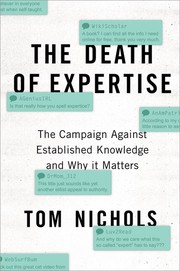
The death of expertise
Explains why expert authority matters and how it can be misunderstood or rejected.
Bad Science
Helps readers evaluate health claims, evidence quality and expert-sounding misinformation.

Doctor Who Fooled the World
Shows how medical credentials and institutions can carry damaging false claims.
Calling Bullshit
Equips readers to assess evidence, charts, studies and expert-sounding claims.
eBay marketplace picks
Marketplace Samples
Example marketplace items related to this page. Use the search link to explore similar finds on eBay.
Endnotes
1.
Source: who.int
Link:https://www.who.int/europe/news/item/09-12-2024-trusted-messengers–community-anchors-and-agents-of-change–engaging-health-and-care-workers-in-times-of-crisis
Source snippet
World Health OrganizationTrusted messengers, community anchors and agents of...9 Dec 2024 — As trusted influencers, they significantly i...
2.
Source: archive.cdc.gov
Title: Archive12 COVID-19 Vaccination Strategies for Your Community
Link:https://archive.cdc.gov/www_cdc_gov/vaccines/covid-19/vaccinate-with-[confidence
3.
Source: pmc.ncbi.nlm.nih.gov
Link:https://pmc.ncbi.nlm.nih.gov/articles/PMC3136032/
4.
Source: pmc.ncbi.nlm.nih.gov
Link:https://pmc.ncbi.nlm.nih.gov/articles/PMC2831678/
5.
Source: pmc.ncbi.nlm.nih.gov
Link:https://pmc.ncbi.nlm.nih.gov/articles/PMC10542734/
6.
Source: tropmedres.ac
Title: major medical journals retract covid 19 studies
Link:https://www.tropmedres.ac/news/major-medical-journals-retract-covid-19-studies
7.
Source: reuters.com
Link:https://www.reuters.com/business/healthcare-pharmaceuticals/medical-misinformation-more-likely-fool-ai-if-source-appears-legitimate-study-2026-02-09/
Source snippet
The tone of prompts also influenced AI responses—those written in an authoritative voice increased the likelihood of false information be...
8.
Source: who.int
Link:https://www.who.int/europe/news/item/01-09-2022-infodemics-and-misinformation-negatively-affect-people-s-health-behaviours–new-who-review-finds
9.
Source: iris.who.int
Title: int Impact of the COVID-19 infodemic on frontline workers
Link:https://iris.who.int/server/api/core/bitstreams/6b8e4614-4298-4374-9e95-ae562cd27e0f/content
10.
Source: who.int
Title: donors making a difference fighting myths and misinformation
Link:https://www.who.int/news-room/feature-stories/detail/donors-making-a-difference–fighting-myths-and-misinformation
11.
Source: who.int
Link:https://www.who.int/teams/digital-health-and-innovation/digital-channels/fides
12.
Source: emro.who.int
Title: strategies to combat infodemics in public health
Link:https://www.emro.who.int/emhj-volume-31-2025/volume-31-issue-5/strategies-to-combat-infodemics-in-public-health.html
13.
Source: hlh.who.int
Link:https://hlh.who.int/briefs/how-has-covid-19-affected-delivery-of-ehs-hifa-2nd-discussion
14.
Source: who.int
Link:https://www.who.int/docs/default-source/coronaviruse/vaccine-misinformation-toolkit_desktop1.pdf
15.
Source: iris.who.int
Title: int Systematic reviews
Link:https://iris.who.int/server/api/core/bitstreams/19e2cf79-a3e0-443e-b88e-99668c1979ab/content
16.
Source: who.int
Link:https://www.who.int/news/item/26-09-2024-who-and-tiktok-to-collaborate-on-more-science-based-information-on-health-and-well-being
17.
Source: stacks.cdc.gov
Title: cdc 160722 DS1
Link:https://stacks.cdc.gov/view/cdc/160722/cdc_160722_DS1.pdf
18.
Source: wwwnc.cdc.gov
Title: 20 3139 article
Link:https://wwwnc.cdc.gov/eid/article/27/2/20-3139_article
19.
Source: stacks.cdc.gov
Title: cdc 160722 DS5
Link:https://stacks.cdc.gov/view/cdc/160722/cdc_160722_DS5.pdf
20.
Source: cdc.gov
Link:https://www.cdc.gov/vaccines/hcp/index.html
21.
Source: archive.cdc.gov
Title: vaccination strategies
Link:https://archive.cdc.gov/www_cdc_gov/vaccines/covid-19/downloads/vaccination-strategies.pdf
22.
Source: stacks.cdc.gov
Title: cdc 106450 DS1
Link:https://stacks.cdc.gov/view/cdc/106450/cdc_106450_DS1.pdf
23.
Source: stacks.cdc.gov
Title: cdc 104372 DS1
Link:https://stacks.cdc.gov/view/cdc/104372/cdc_104372_DS1.pdf
24.
Source: archive.cdc.gov
Title: generate vaccinations
Link:https://archive.cdc.gov/www_cdc_gov/vaccines/covid-19/health-departments/generate-vaccinations.html
25.
Source: stacks.cdc.gov
Title: cdc 105560 DS1
Link:https://stacks.cdc.gov/view/cdc/105560/cdc_105560_DS1.pdf
26.
Source: magazine.hms.harvard.edu
Title: there crisis trust science and medicine
Link:https://magazine.hms.harvard.edu/articles/there-crisis-trust-science-and-medicine
27.
Source: theguardian.com
Title: andrew wakefield mmr vaccine
Link:https://www.theguardian.com/society/2010/jan/28/andrew-wakefield-mmr-vaccine
Source snippet
The GMC concluded that Wakefield acted dishonestly and irresponsibly, conducting unethical and invasive tests such as colonoscopies and s...
28.
Source: frontiersin.org
Link:https://www.frontiersin.org/journals/medicine/articles/10.3389/fmed.2024.1430263/full
29.
Source: theguardian.com
Title: covid 19 lancet retracts paper that halted hydroxychloroquine trials
Link:https://www.theguardian.com/world/2020/jun/04/covid-19-lancet-retracts-paper-that-halted-hydroxychloroquine-trials
30.
Source: theguardian.com
Link:https://www.theguardian.com/society/2025/dec/05/ai-deepfakes-of-real-doctors-spreading-health-misinformation-on-social-media
31.
Source: mountsinai.org
Title: Mount Sinai Health System AI Chatbots Can Run With Medical Misinformation, Study
Link:https://www.mountsinai.org/about/newsroom/2025/ai-chatbots-can-run-with-medical-misinformation-study-finds-highlighting-the-need-for-stronger-safeguards
32.
Source: mayoclinic.org
Title: art 20587692
Link:https://www.mayoclinic.org/healthy-lifestyle/consumer-health/in-depth/spot-fake-health-articles-misinformation/art-20587692
33.
Source: edhub.ama-assn.org
Title: what every doctor should know about medical misinformation
Link:https://edhub.ama-assn.org/pages/what-every-doctor-should-know-about-medical-misinformation
34.
Source: ama-assn.org
Title: covid 19 vaccine hesitancy 10 tips talking patients
Link:https://www.ama-assn.org/public-health/prevention-wellness/covid-19-vaccine-hesitancy-10-tips-talking-patients
35.
Source: Wikipedia
Title: Andrew Wakefield
Link:https://en.wikipedia.org/wiki/Andrew_Wakefield
36.
Source: theguardian.com
Title: andrew wakefield sues bmj mmr
Link:https://www.theguardian.com/society/2012/jan/05/andrew-wakefield-sues-bmj-mmr
37.
Source: guides.library.ubc.ca
Link:https://guides.library.ubc.ca/healthmisinformation/communication
38.
Source: dadun.unav.edu
Link:https://dadun.unav.edu/server/api/core/bitstreams/b2562cd7-cf30-4095-910e-3b3f86bb1bcd/content
Additional References
39.
Source: youtube.com
Title: How to tell if doctors and health influencers on social media are AI-generated
Link:https://www.youtube.com/watch?v=W8beAqbStHY
Source snippet
Quackery, Celebrity Doctors and TikTok Energy - Medical Misinformation Isn't New...
40.
Source: youtube.com
Title: Quackery, Celebrity Doctors and Tik Tok Energy
Link:https://www.youtube.com/watch?v=UtkDlbLeetI
Source snippet
Who is Creating Medical Misinformation? | Truth Talks | Big [If True]...
41.
Source: youtube.com
Title: Who is Creating Medical Misinformation? | Truth Talks | Big [If True]
Link:https://www.youtube.com/watch?v=twjVQmXD76I
Source snippet
Doctor Mike: The Health Lies That Are Keeping You Sick (and What to Do Instead)...
42.
Source: youtube.com
Title: Doctor Mike: The Health Lies That Are Keeping You Sick (and What to Do Instead)
Link:https://www.youtube.com/watch?v=hNWa7zJIsko
Source snippet
Debunked Medical Myths - Between Two White Coats...
43.
Source: ama-assn.org
Link:https://www.ama-assn.org/about/publications-newsletters/dr-mike-using-social-media-combat-medical-misinformation
44.
Source: facebook.com
Link:https://www.facebook.com/SuffolkCountyHealth/posts/false-health-claims-abound-but-physicians-are-still-the-most-trusted-source-for-/854379136722742/
45.
Source: springermedizin.de
Link:https://www.springermedizin.de/highlighting-consensus-among-medical-scientists-increases-public/9750922
46.
Source: facebook.com
Link:https://www.facebook.com/medscape/posts/how-do-you-build-trust-when-patients-believe-misinformation-experts-say-it-start/1883758655595554/
47.
Source: instagram.com
Link:https://www.instagram.com/p/DEnhPAWsRIM/
48.
Source: rcp.ac.uk
Link:https://www.rcp.ac.uk/news-and-media/news-and-opinion/michelle-gavin-misinformation-in-healthcare/
Topic Tree